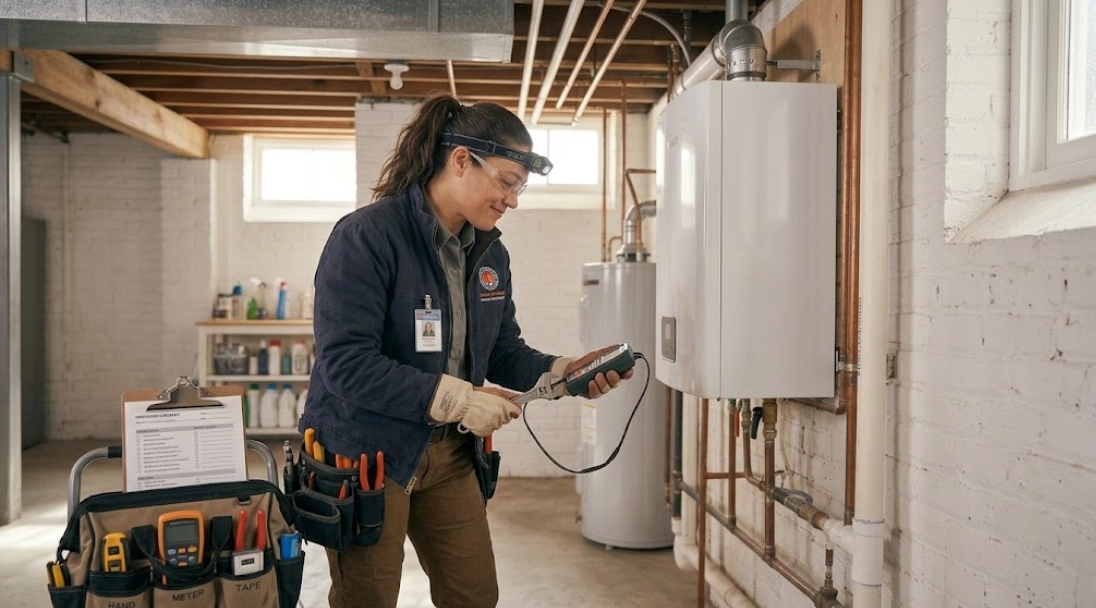
Diagnostic Heating Support for Dyker Heights Properties
Heating systems in Dyker Heights experience rigorous demands throughout the cold coastal Brooklyn winter. Famous for its generous lot sizes, custom single-family residences, and classic semi-detached brick homes—many constructed in the 1920s through 1960s—the neighborhood features deep residential basements housing heavy cast-iron boilers. These properties rely on low-pressure steam heating with vintage cast-iron radiators or closed-loop hydronic hot-water circulation.
When a boiler fails in freezing weather, indoor comfort drops swiftly. Whether you are dealing with an urgent no heat boiler repair Dyker Heights Brooklyn call or persistent clanking sounds behind bedroom walls, accurate diagnosis is vital. Rather than replacing random components through guesswork, a methodical heating evaluation pinpoints whether mechanical wear, electrical failures, combustion faults, or water-feed complications are preventing your system from delivering steady warmth.
Common Boiler Problems in Dyker Heights Homes
Because local properties feature diverse heating architectures, equipment issues vary widely across steam and hot-water units:
- Burner Lockouts & Electronic Ignition Failures: Gas burners with oxidized flame rectification sensors, worn thermocouple assemblies, or faulty ignition control modules fail to ignite safely, leaving the boiler in a locked safety state.
- Short-Cycling (Rapid On/Off Firing): When an aquastat is miscalibrated, heat exchanger passages are choked with mineral scale, or circulators are obstructed, the boiler fires for brief seconds before shutting down prematurely.
- Low-Water Cutoff (LWCO) Shutdowns: Float-type or probe-style low-water cutoffs trip to protect cast-iron heat exchanger sections from cracking when the boiler loses adequate water supply.
- Discharging Pressure Relief Valves: When internal expansion tanks lose their air charge or automatic water feeders overfill the boiler vessel, safety relief valves release scalding water onto basement floors.
- Noisy Clanging or Water Hammer: Severe knocking in pipes typically stems from broken steam radiator vents, incorrect pipe slopes (pitch), or trapped condensation colliding with fresh steam in main risers.
System Diagnostic Advisory
If you notice your boiler not working Dyker Heights Brooklyn, do not bypass electrical safety switches or tamper with gas train regulators. Built-in safety mechanisms exist to prevent dry-firing and high-pressure steam hazards.
Steam Boiler vs. Hot-Water Boiler Systems
Understanding your heating system's design helps clarify why specific operational faults occur:
| Heating System Type | Operating Principle | Typical Symptoms When Failing | Primary Diagnostic Focus |
|---|---|---|---|
| Low-Pressure Steam | Boils water to generate steam under 0.5 to 2 PSI; rises naturally through risers to cast-iron radiators. | Cold radiators, spitting air vents, fluctuating water level in sight glass, water hammer in pipes. | Sight glass water level, pigtail siphon tube, vaporstat/pressuretrol switches, automatic water feeders. |
| Closed-Loop Hydronic (Hot Water) | Heats water to 160°F–180°F under 12–20 PSI; circulates water through baseboards or radiators using electric pumps. | Uneven room heating, circulator pump humming without fluid flow, leaking relief valves, airbound piping. | Expansion tank bladder, circulator pump relay, air purgers, zone valves, backflow preventers. |
Targeted steam boiler repair Dyker Heights Brooklyn requires testing the steam pressure gauge, checking that the pigtail siphon tube beneath the pressure switch is clear of sediment, and verifying that the skim tapping has cleared surface oils that produce surging water levels. In contrast, hot water boiler repair Dyker Heights Brooklyn focuses on fluid circulation, closed-loop pressure stability, and bleed valves that release air pockets locked inside upper-floor baseboard circuits.
What Happens During a Boiler Diagnostic & Repair Visit
A comprehensive service call involves methodical assessment rather than trial-and-error part replacement. Here is how our technicians evaluate residential heating equipment:
Safety & Electrical Inspection
We test line voltage, transformer output, thermostat continuity, emergency shut-off switches, and high-limit aquastat controls to ensure electrical safety.
Combustion & Burner Testing
Technicians inspect the gas valve, pilot assembly, flame rectification sensors, electronic ignition modules, and draft hood to confirm smooth combustion.
Hydronic & Water Feed Verification
We inspect water feed valves, backflow devices, gauge glass seals, low-water cutoff floats, and expansion tank pressure to ensure correct fluid volume.
Operational Firing & Thermal Balancing
The boiler is fired through complete operational cycles, testing relief valves, monitoring flue draft, and checking distribution piping for balanced thermal delivery.
Repair vs. Replacement: Making the Right Decision
Not every boiler malfunction justifies an immediate replacement. Many common issues—such as a seized circulator pump, burned-out zone valve motor, corroded low-water cutoff switch, or faulty thermocouple—can be resolved reliably through targeted repairs. However, when a cast-iron boiler block develops hairline fractures or internal water jackets rot through due to decades of oxygen-rich freshwater additions, replacement becomes necessary.
Key factors influencing heating repairs include:
- Vessel Age and Metallurgy: Boilers approaching 20 to 30 years with cracked sections or obsolete replacement parts are prime candidates for complete modernization.
- Frequency of Breakdowns: If service calls are required multiple times each winter, the cumulative cost and disruption often tip the balance toward modern equipment.
- Efficiency and Chimney Conditions: Older atmospheric equipment vents considerable heat out the masonry chimney. When upgrading, chimney liners and venting must be evaluated.
For extensive system overhauls, explore our comprehensive guidance on boiler replacement in Dyker Heights, where we detail proper heat-loss calculations and equipment sizing.
When a Boiler Problem Requires Immediate Action
Certain boiler symptoms pose safety risks and require shutting down the equipment immediately:
- Soot or Scorching Around the Burner: Black soot accumulation indicates incomplete gas combustion and potential carbon monoxide production.
- Rapidly Rising Pressure: If the boiler pressure gauge approaches or exceeds 30 PSI on a hot-water system or 15 PSI on a steam boiler, switch the system off.
- Continuous Screeching or Dry-Firing: If the burner fires while the gauge glass is dry, turn off the electrical switch immediately. Never add cold water to an overheated, dry cast-iron boiler block.
⚠️ Critical Gas Safety Notice
If you smell natural gas (a rotten-egg odor) or suspect a gas leak around your heating equipment, leave the building immediately. Do not operate light switches, use phones inside, or attempt to relight burners. From a safe location outdoors, call National Grid or 911 immediately.
Service Coverage in Dyker Heights and Surrounding Brooklyn Communities
Our service technicians focus primarily on Dyker Heights residential homes, extending coverage to adjacent communities throughout southwest Brooklyn. Whether your residence is situated along 13th Avenue, near the historic Dyker Beach Golf Course, or neighboring residential blocks, we provide diagnostic boiler repairs tailored to local architecture.
Property owners seeking reliable boiler repair near Bay Ridge or boiler repair near Bensonhurst can also explore our dedicated service areas overview for extended diagnostic heating coverage, or contact our team directly to schedule an on-site evaluation.
Frequently Asked Questions About Boiler Repair
In a steam heating system, continuous firing with cold radiators usually indicates failed steam air vents, waterlogged pipes caused by improper pitch, or inadequate system vapor pressure. In a closed-loop hydronic (hot-water) system, this symptom typically points to an airbound distribution loop, a seized circulator pump, or a failing zone valve.
Verify that your emergency red burner shutoff switch at the basement stairs is set to ON, confirm your thermostat has working batteries and is set higher than room temperature, and check for tripped electrical breakers. For steam boilers, check the gauge glass sight tube to ensure water is visible midway.
Loud clanging or water hammer occurs when fast-moving steam collides with accumulated pools of trapped condensate water. This is commonly caused by radiators pitching away from their supply valves, sagged steam mains in the cellar, or defective radiator air vents.
A low-water cutoff (LWCO) is an essential safety device that interrupts the electrical circuit to the burner if water inside the boiler drops below a safe operational threshold. This prevents dry-firing, which can crack cast-iron sections or cause hazardous overheating.
Yes, our diagnostic evaluations cover gas boiler repair Dyker Heights Brooklyn properties require, including electronic ignition, atmospheric burners, power-vented units, and fuel conversions across local residential basements.