Expert Radiator Diagnostics for Brooklyn Steam Systems
In Dyker Heights, many classic brick homes and two-family residences rely on vintage one-pipe or two-pipe low-pressure steam heat. When functioning as engineered, steam heating provides quiet, comfortable, radiant warmth. However, when mechanical components wear or house settling alters pipe pitch, occupants suffer from violent clanging, unbalanced heat distribution, and leaking radiator valves. Professional radiator repair Dyker Heights Brooklyn restores quiet operation and consistent heating efficiency.
Cast-iron radiators are remarkably long-lasting, frequently serving homes for over a century. However, valves, air vents, spud unions, and connected branch lines require periodic mechanical service. Rather than ignoring hissing valves that damage parquet floors or stain ceilings below, accurate diagnostic attention identifies whether the fault lies within an individual radiator or stems from a central boiler pressure imbalance.
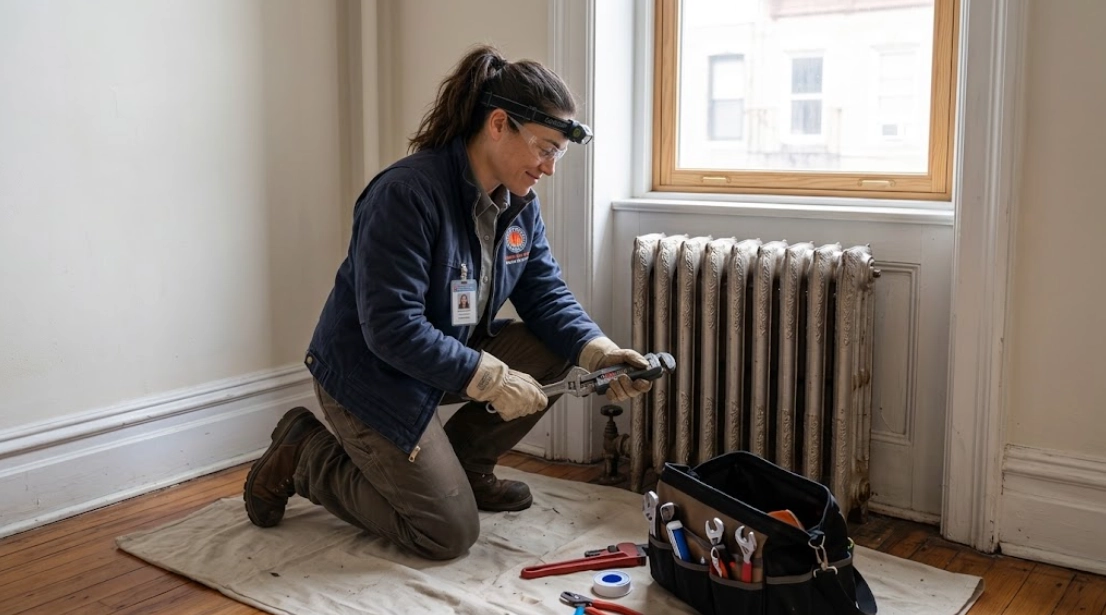
Common Steam Radiator Problems & Root Causes
Understanding why radiators malfunction ensures effective, long-lasting solutions:
- Banging and Water Hammer: The disruptive sound of knocking steam pipes occurs when steam moving at high velocity collides with trapped condensate water. This typically stems from a radiator sagging away from its supply valve or a sagged steam main in the cellar.
- Cold or Partially Luke-Warm Radiators: Steam cannot enter a cast-iron radiator until the cold air inside is completely vented. If the automatic air vent is clogged with mineral scale or seized shut, the radiator remains cold regardless of how long the basement boiler fires.
- Leaking Valve Stems and Packing Nuts: Repeated seasonal heating expansion degrades graphite valve packing, causing steam and black water to drip onto flooring around the valve handle during heating cycles.
- Spitting or Sputtering Air Vents: When an air vent continuously spits water, the cause is either improper radiator pitch trapping water inside the castings or a boiler surging due to contaminated boiler water.
Valve Replacement, Pitch Adjustment, and Vent Balancing
A typical service visit for radiator troubleshooting involves meticulous mechanical calibration:
- Steam Radiator Valve Replacement: Complete valve replacement requires isolating steam pressure, freeing frozen spud nuts with specialized radiator spud wrenches, and installing heavy-duty brass valves rated for steam service.
- Correcting Radiator Pitch: In one-pipe steam systems, condensate must flow backwards through the exact same pipe that supplies steam. The radiator must pitch slightly downward toward the supply valve (approximately 1/4 inch over its length) so water drains freely.
- Installing Balanced Main and Radiator Vents: Radiator vents must be selected with precise orifice sizes. Large quick-venting valves in distant bedrooms allow steam to reach remote radiators before near-boiler rooms overheat. Main line vents in the cellar must also function to vent building risers rapidly.
If your radiator issues coincide with sudden burner shutdowns, gauge glass water surging, or leaking relief valves, the problem may originate at the central heating unit. Explore our comprehensive guides for boiler repair in Dyker Heights and boiler replacement to evaluate system-wide heating health. For domestic water temperature concerns, review our water heater repair options.
How Radiator Issues Signal Larger Boiler Complications
Radiators do not operate in isolation. In many Dyker Heights homes, chronic radiator noise or spitting is actually an indicator of:
- Excessive Boiler Operating Pressure: If the boiler’s pressure switch (vaporstat or pressuretrol) is set too high (above 2 PSI), steam velocities compress air vents shut, preventing balanced distribution and forcing steam leaks around valve stems.
- Surging or Foaming Boiler Water: Grease, oils, or heavy sediment inside the boiler vessel create boiling bubbles that lift water into the steam main, flooding radiators with dirty condensate.
- Failed Basement Main Vents: When big main air vents in the basement ceiling fail, steam is forced to push air slowly out of individual radiator vents, creating severe imbalances between floors.
Frequently Asked Questions About Radiator Repair
Water hammer in steam systems happens when high-velocity steam collides with pools of trapped condensate water. This is usually caused by radiators tilting the wrong direction, sagged horizontal steam mains in the basement, or defective air vents that trap air and impede condensate drainage.
In a standard one-pipe steam system, the radiator shutoff valve must always be either completely open or completely closed. Throttling the valve restricts the pipe opening, preventing returning condensate water from draining back into the boiler, leading to loud banging, spitting vents, and leaking valve stems.
A cold radiator is typically airbound because its thermostatic air vent has seized shut, preventing trapped air from escaping so steam can enter. Other common causes include a fully closed supply valve, a blocked spud union, or insufficient steam vapor pressure from the central boiler.