🚨 CRITICAL GAS LEAK SAFETY INSTRUCTIONS
If you smell the distinctive rotten-egg or sulfur odor of natural gas, hear a hissing gas pipe, or observe evidence of an active gas leak:
- Evacuate the premises immediately. Ensure all family members and occupants exit to outdoor safety.
- Do not flip electrical light switches or unplug appliances. Electrical sparks can ignite gas vapors.
- Do not use phones or intercoms inside the building.
- Do not attempt to locate the leak yourself.
- From a safe outdoor location, call 911 and National Grid (1-718-643-4050) immediately.
Notice: Website browsing or scheduling routine service calls is never an acceptable substitute for immediate emergency response in active leak scenarios.
Professional Gas Piping Services in Dyker Heights
Natural gas systems in Dyker Heights power residential heating boilers, domestic water heaters, kitchen cooktops, and outdoor fireplace lines. Because many local homes feature vintage threaded black iron piping, regular inspections and meticulous code compliance are critical to family safety. Professional gas line repair Dyker Heights Brooklyn ensures that your gas distribution piping satisfies New York City Department of Buildings (DOB) and fuel gas code standards.
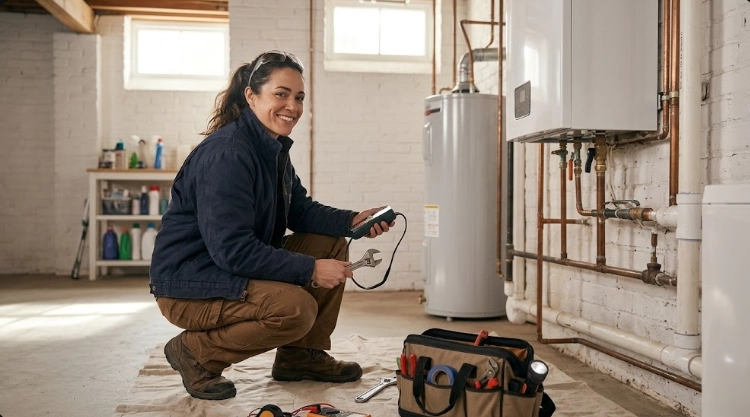
Whether you are addressing a minor gas line shutoff valve issue following a meter safety test or planning a permitted appliance connection during a kitchen renovation, certified technicians use electronic combustible gas detectors and high-precision pressure manometers to evaluate every joint, regulator, and union.
Signs of Aging or Damaged Gas Piping
Beyond active odor alerts, homeowners should watch for visible indicators that necessitate professional evaluation:
- Surface Rust and Flaking Corrosion: Exposed basement piping subjected to cellar humidity or seasonal condensation develops rust scale that weakens pipe wall thickness over time.
- Faint Hissing Sounds Near Valves: Whistling or hissing noises near appliance shutoff cocks or meter manifolds indicate failing thread sealant or cracked valve seats.
- Yellow or Flickering Burner Flames: Burners on boilers or stoves that produce unsteady yellow flames rather than crisp blue cones often suffer from improper gas supply pressure or debris blockages.
- Corroded Appliance Flex Connectors: Older corrugated brass or thin-wall appliance connectors can crack from vibration or metal fatigue and must be replaced with modern coated stainless steel lines.
NYC Local Law 152 and Periodic Gas Inspections
Property owners in Dyker Heights managing multi-family properties must stay informed regarding NYC Local Law 152 (LL152). Under this municipal law, all buildings containing more than two residential units (except R-3 single- and two-family homes) must undergo periodic gas piping inspections conducted by a Licensed Master Plumber once every four years based on community district schedules.
During an LL152 inspection, technicians inspect:
- All exposed gas lines from the point of entry through public corridors, utility spaces, and boiler rooms.
- Gas meters, master shutoff cocks, and regulator relief vents to ensure proper exterior clearance.
- Piping supports, hangers, and structural wall sleeves to identify corrosion risks or unapproved modifications.
If your gas lines are being evaluated in conjunction with central boiler upgrades, explore our detailed guides on boiler repair in Dyker Heights and boiler replacement. For domestic water heating lines, review our water heater repair services.
How Professional Pressure Testing is Executed
System Isolation
Gas supplies are safely isolated at the master valve, and downstream appliances are disconnected or isolated with rated caps.
Pressure Introduction
The piping system is pressurized with dry air or inert nitrogen to the code-prescribed test pressure (typically 3 PSI for low-pressure systems).
Manometer Monitoring
A digital differential manometer is monitored over a minimum 30-minute test period to verify zero pressure decline.
Utility Reconnection & Relight
Following verified leak-free status and DOB sign-offs, lines are purged of air, meters unlocked, and appliance burners safely relit.
Frequently Asked Questions About Gas Line Services
Evacuate the building immediately. Do not touch electrical light switches, do not use phones indoors, and do not create any open flames. Call 911 and the local gas utility (National Grid) immediately from a safe location outdoors.
Technicians safely isolate the gas line, cap appliance supply shutoffs, and pressurize the pipe with inert air or nitrogen using a precision digital manometer. The gauge is monitored over a prescribed duration to ensure zero pressure decay before gas is reintroduced.
NYC Local Law 152 applies to all buildings classified with more than two residential units. A Licensed Master Plumber must inspect exposed gas piping from the point of entry through public areas once every four years to verify structural safety and leak-free integrity.